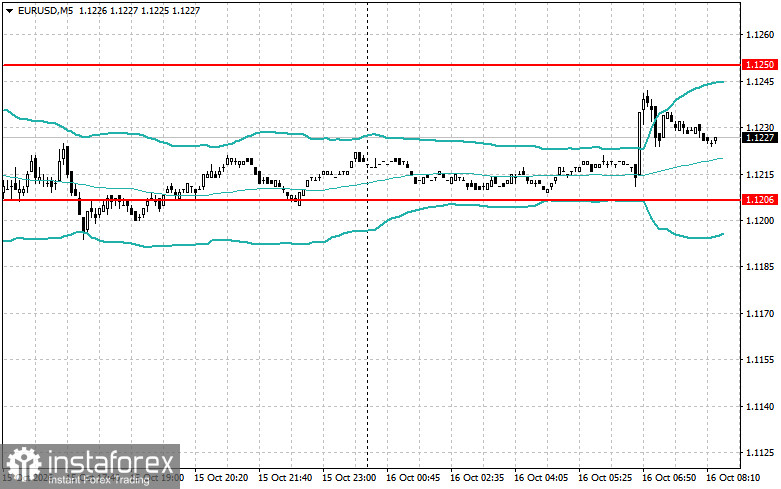
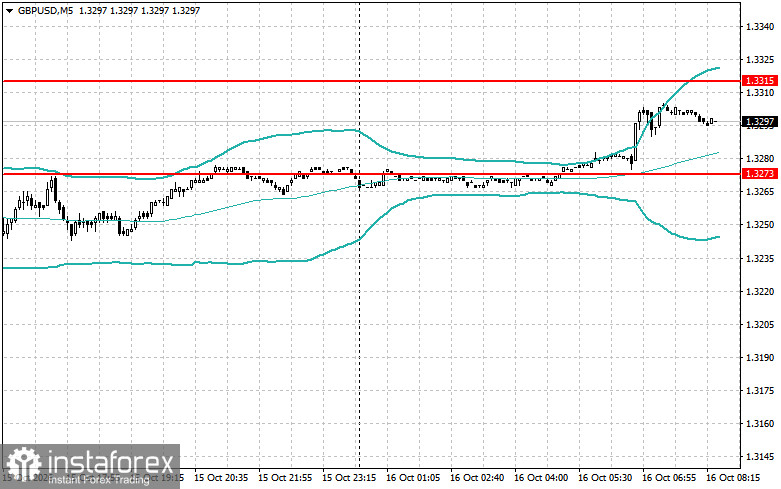
The dollar received only brief support from US data yesterday and lacked the strength to sustain a push against the euro and pound. EUR/USD now trades around 1.1226 and GBP/USD around 1.3297. Both pairs jumped sharply this morning — the euro nearly to 1.1242 and the pound to 1.3305 — then pulled back a little.
US data yesterday were strong. Producer prices for September rose 1.3% month-on-month versus 0.5% expected (and 0.5% in August) — the strongest monthly increase since March 2022. The annual rate accelerated to 6.3%. PPI measures prices at the factory gate and typically leads retail prices, so the market reads it as a hint that pressure on consumer prices will persist. Energy contributed the most: gasoline rose about 20.3% month-on-month. Core PPI (ex food & energy) jumped 0.7% versus 0.3% expected and accelerated to 5.0% year-on-year from 4.8%.
Retail sales also beat expectations, up 0.8% month-on-month versus 0.3% expected, and August was revised up to +1.3%. That shows Americans keep spending despite higher prices. Regional surveys were mixed: Empire Manufacturing jumped to 25.5 (vs 10.3 expected), while the Philadelphia Fed index fell to 20.9 (vs 26.5 expected and 37.8 prior). Initial jobless claims were 199k vs 200k expected, so the labor market remains firm.
Recall headline CPI already rose to 3.7% year-on-year from 3.4%; together these prints support the case for a Fed hike in December. But the market priced that in long ago, so even strong data did not give the dollar a fresh impulse. For now, the euro and pound are more likely to react to their own local data than to US surprises.
That was a relief for European currencies. EUR/USD had earlier fallen on weak Eurozone industrial production (-0.5% m/m in August vs 0.0% expected), but strong US prints did not deepen that drop. The pound held up after UK GDP for August showed +0.1% m/m (vs -0.1% expected).
Today the euro has a clear reason to move: the final September eurozone CPI release in the first half of the day. The headline showed a preliminary +3.8% y/y vs 3.2% in August, with energy up 18.8% y/y after 14.3% previously. The final print will confirm or revise that figure; markets react only to surprises. An upward revision would support the euro and add to the European Central Bank's case against easing — the deposit rate is 2.50%, and markets expect a final hike to 2.75% in December.
The final core CPI (ex energy & food) will be particularly important: it shows whether price pressure is embedded in the economy. August core was 2.4%; the final September core reading will give a clearer picture and is more relevant to the ECB than the headline, since it's less explainable by oil moves.
External trade balance will also be released — a surplus would imply stronger foreign demand for the euro.
The UK has no important releases today, which helps the pound late in the week. With no fresh UK inflation, labor, or activity data to revise Bank of England expectations (Bank Rate currently 3.75%), the pound's moves will be driven mainly by external forces — notably dollar sentiment. After yesterday's reaction to firm US prints, finding new reasons for further dollar strength is not straightforward.
Momentum
For the euro, the breakout range is 48 pips wide, from 1.1193 to 1.1241. Price at 1.1226 sits in the upper part of that range — 33 pips above the lower boundary and only 15 pips below the upper. This morning the pair nearly reached 1.1241, rising to 1.1242, but it failed to hold and pulled back. This is a good example of why a single touch of a level is insufficient. If price closes convincingly above 1.1241, the next targets are 1.1275 and 1.1310. For that to happen, the euro needs strong eurozone inflation, and preferably a strong core reading as well. If price convincingly breaks below 1.1193, the targets would be 1.1156 and 1.1117 — but that scenario is further away, since price is currently 33 pips above the lower boundary.
For the pound, the range is narrower — 34 pips, from 1.3273 to 1.3307 — and price at 1.3297 lies 24 pips above the lower boundary and only 10 pips below the upper. This morning the pair rose to 1.3305, missing 1.3307 by two pips, then pulled back. If price closes above 1.3307, targets are 1.3341 and 1.3368; this scenario is supported by strong UK data and a softer dollar backdrop. If price closes below 1.3273, the targets are 1.3233 and 1.3209 — which would require a return of dollar strength, a trigger not currently apparent. I would skip the first reaction at the level and wait for a confirmed close.
Mean Reversion
For the euro, there are two reversion levels: 1.1250 and 1.1206. The upper one sits 9 pips above the breakout point 1.1241 and 25 pips below the first target at 1.1275. If price moves above 1.1241, reaches 1.1250, fails to hold, and returns below 1.1241, I would consider selling with a protective stop sensibly placed above 1.1275. The distance here is large enough that distinguishing a reversion from a true breakout is easier. But if price clears 1.1250 and closes above it, that is a confirmed breakout and selling there is not allowed. The lower level 1.1206 lies 20 pips below the current price and 13 pips above the breakout point 1.1193. If price falls to 1.1206 and quickly reverses up, buyers get a rebound idea with a stop below 1.1193. If price falls below 1.1193 and closes there, buying is not allowed.
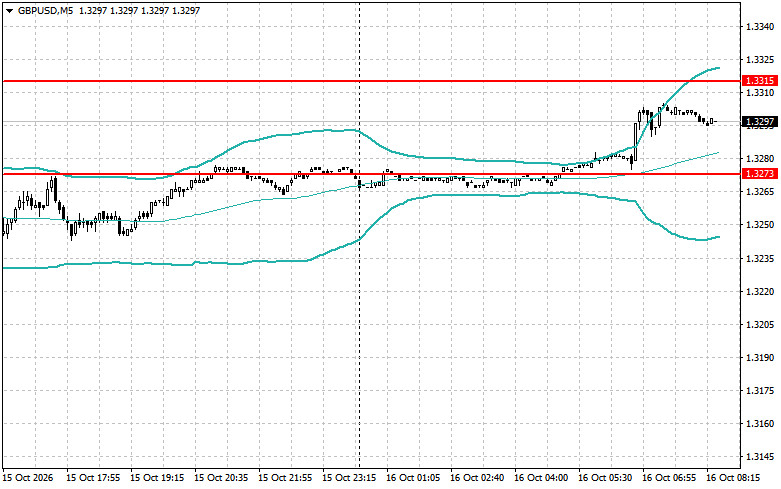
For the pound, the upper level 1.3315 stands 8 pips above the breakout point 1.3307 and 26 pips below the first target at 1.3341. If price moves above 1.3307, reaches 1.3315, and then returns below 1.3307, I would consider selling with a stop above 1.3341. But if it clears 1.3315 and closes above, that is a breakout and selling is not allowed there. The lower level 1.3273 is unusual because it coincides with the downside breakout point; therefore, a mere touch of the level says nothing by itself. If price drops to 1.3273, quickly bounces and re-enters the range, buyers get a reversion idea with a stop below 1.3233. If price breaks 1.3273 and closes convincingly below, that is a downside breakout, and buying is not allowed. You can distinguish the two cases only by whether price closes beyond the level, so it's wiser to skip the first reaction in that zone.